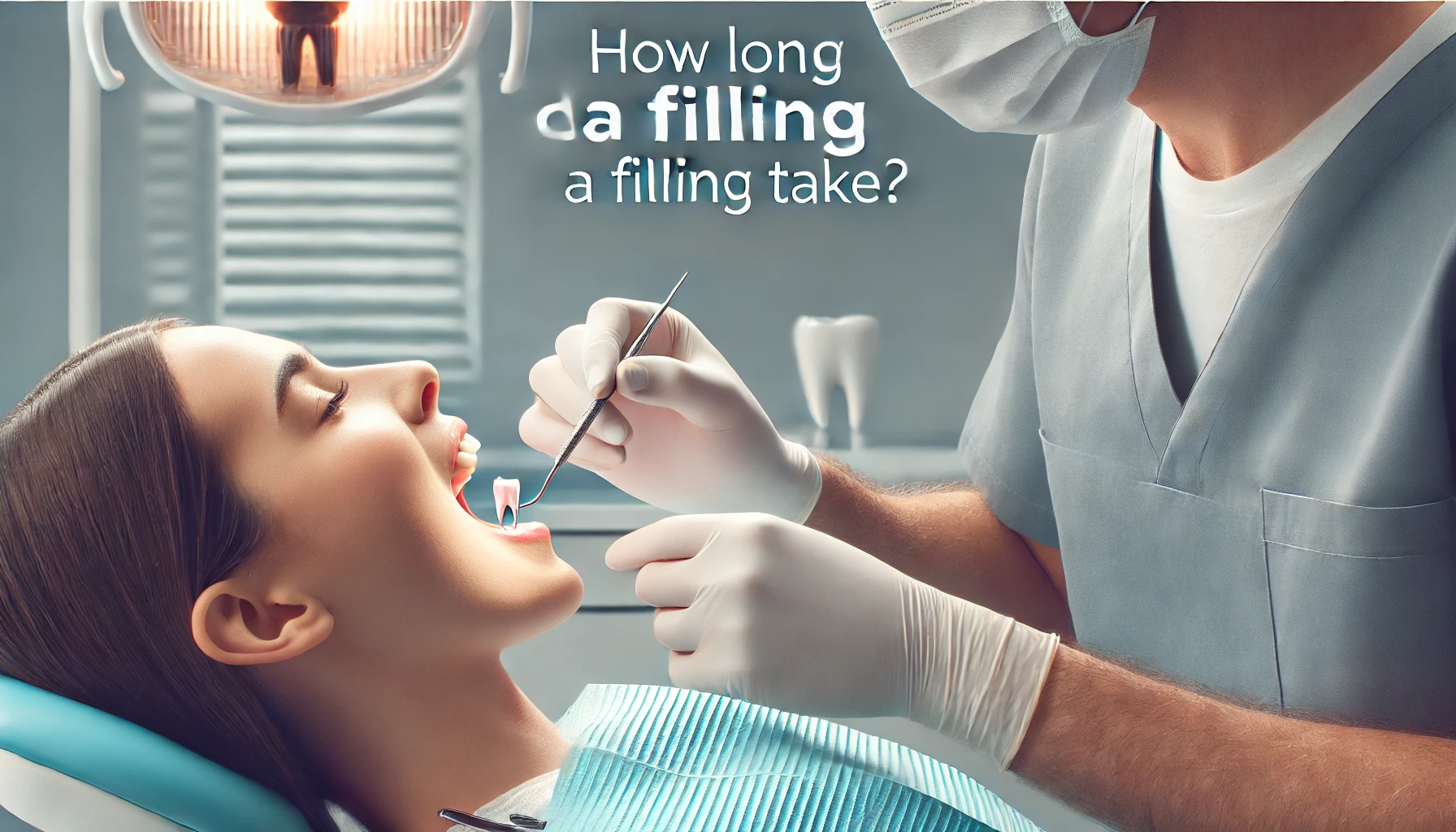
How long does a filling take

Cavities formation occurs through plaque formation; the plaque is a sticky layer of bacteria that builds up on teeth and gets mixed with food and beverages containing sugars, generating acids that break down tooth enamel. This results in openings known as cavities and can not heal themselves thus necessitating filling by a dentist. Not only does a filling replenish the damaged tooth but it also guards a person against future decay by removing areas that will sustain bacteria. It is a regular process (often at no cost), and unrelated to pain and often painless, and it normally does not exceed one hour but after the process sensitivity may be a problem.

Cavities are a common problem with the world health organization accounting untreated cavities as the most prevalent dental imbalance worldwide and provides that approximately 2 billion adults possess cavities. One of the most common procedures that are done more than any other is dental fillings and one of the reasons they are carried out is to repair the teeth due to the damage caused by the decay and to guard it against further damage. If you need more interested info like that visit quick guider.

Understanding more about how it works, what is used, and recovery time should help get rid of any nervousness about the treatment. Fillings recover the ability of a tooth, allowing patients to recover the necessary routine within a short period of time and with minimum discomfort.

How Long Does It Take to Fill a Cavity?

Filling of a cavity is a common dental procedure and it can last between 30 minutes to one hour depending on issues such as the size, location of the cavity, and material used as a filler. Following the procedure, you might feel temporary sensitivity to your teeth or teeth soreness, which should be relieved by avoiding overly hot or cold, as well as, sugary food.

Other fillings take some time to completely set hence the sticky or hard foods are avoided until the filling stiffens. In case the filling seems to be sharp or you experience pain, visit your dentist who will make the necessary changes. Avoiding detection of cavities escalates the problem, and early treatment heals the tooth and stops the process of decay.

The Filling Procedure: What to Expect

Filling of cavities are simple operations which usually take approximately one hour. The dental expert starts by injecting the patient with a local anesthetic to numb the area followed by the removal of decayed material in the tooth using either a dental drill or electrosurgery laser. Depending on the filling material, special light can be used to set the material after it has been prepared in the cavity and placed. Lastly, the filling is polished so that there is smooth surface and fitting and the anesthetic effects could be still felt temporarily after the procedure.

How long does it take to get a filling?

The average dental process procedure of a filling will ranges between 20 minutes to one hour depending on the location and size of the cavity, the number of the fillings as well the material to be used. One-visit fillings with composite resin can be done in a single visit, but gold- or porcelain inlays and onlays could require two visits due to the necessity to send impressions to a laboratories.

The procedure requires the numbing of their area, the nullification of the decaying parts, the re-shaping of the emptiness, setting of the filling material then polishing of the tooth. Bigger or more complicated shrinkages, and substitution of old fillings may require a little longer.

How long does a filling take on a child?

Untreated cavities affect 1 of every 5 children between the age of 5-11 years as seen in the CDC. Child fillings normally take about an hour, but small cavities may be filled within a 10 minute interval. An anesthetic or nitrous oxide can be applied, delaying the patient due to the time that is taken to get these children under by younger children or when a child cannot sit still. It is normal that children have temporary pain or sensitivity after the filling is done, and depending on the particular needs of the children, dentists present the range of options starting with the amalgam or the composite resin, ceramic, or the glass ionomer filling material.

How long does it take for a filling to set?

Dental fillings take time to fix, and the duration is dependent on the content of the filling. Amalgam fillings will become weak in one hour and become strong in a 24-hour period, thus it will be necessary to avoid hard products during this period. The composite and glass ionomers fillings are fillings that require light curing in thin slices, and it takes them 2 to 20 seconds to cure 1 slice, and the ceramic requires no curing time as they set shortly using a blue wavelength light. It is usually recommended that dentists wait at least one to two hours before eating or drinking following a filling, and gain full strength after 24 hours.

How long does it take to heal after a filling?

The vast majority of fillings will heal within a matter of days, however there can be mild sensitivity or pain following the use of an anesthetic which can last a few hours to a day or two. There is a possibility of feeling cold sensitivities with metal fillings like amalgam or gold, which can last days or even weeks whereas composite or glass ionomer fillings are not likely to make you feel this cold sensitivity.

Reduce sensitivity by using desensitizing toothpaste, not eating hot or cold foods and chewing off other side of the mouth. When discomfort surpasses two to four weeks or you get a feeling that something is wrong with your bite, book an appointment with your dentist to get it adjusted.

Conclusion

Plaque and acid erosion are a widespread dental problem that manifests as a cavity, which has to be filled to perform dental rejuvenating and teeth protection against further degradation. The process which usually is painless and takes between 20 and 60 minutes includes the removal of the decay and filling the cavity and polishing of the tooth. Fillings may differ in both material and set time, and most take up to 1-24 hours to set completely.

Despite the possible mild sensitivity/discomfort after treatment, immediate treatment will be beneficial to prevent further aggravated damage and ensure oral health. In case you require details concerning How many players on a soccer team, please visit this page How many players on a soccer team. If you need more info related How many units of Botox for forehead

FAQS

How long does it take to do a tooth filling? 

A tooth filling usually takes about 20 minutes to an hour, depending on the size and location of the cavity. Larger cavities or more complex fillings might take a little longer.

Is it painful to get fillings? 

Getting a filling is generally not painful because the dentist will numb the area with a local anesthetic. You might feel some pressure, but it should not hurt during the procedure.

How long after a filling can you eat? 

You should wait at least one to two hours after a filling before eating to allow the filling to set properly. If you have an amalgam filling, it’s best to avoid hard foods for 24 hours.

Can a filling be done in one day? 

Yes, most fillings can be done in one day, especially if they are simple fillings like composite resin. However, some fillings, like gold or porcelain inlays, may need two visits.


Related Post

Leave a Reply

Your email address will not be published. Required fields are marked *