
 Have you ever looked at Christmas decorations and wondered what would have happened had red and green mixed with each other? You would think that two daring bright colors will make something equally adventurous, right?
The answer might shock you. It’s not what you expect. It’s not festive. And it certainly is not the shade you will guess.
When you take red and green, you do not get fireworks, warns the reader. You have something much more down to earth and ground. If you need info related What Time Is 8 Hours From Now.
What Color Do Red and Green Make?
Red + Green = Brown
Yep. Brown. Not reddish-green. Not greenish-red. Just good old brown color.
Surprised? You’re not alone. Majority of the people will want something more exciting when combining red and green. However, the result of this unforeseen color is supported by science, color theory and simple rules of mixing paint. If you want to read about Wedding Ring Right or Left Hand? The Complete Guide for American Couples then visit this page.
Here are the key takeaways:
✓ When mixed (or mixed together, as in paint or pigment) red and green go to make brown.
✓ They are opposite colors that are complementary to one another.
✓ It is the shade of brown that you make depending on what red and green you use.
✓greener with more blue to it? You’ll get a cooler brown
✓ More yellow undertones? Expect a warmer brown
✓ This is true of paint and pigment and not light (we will see, later, why this is so)
Color Mixing 101: Before We Mix Red and Green
Before we get into mixing red and green, let’s cover the basics. Understanding color theory makes everything else click into place.
What Are Primary, Secondary, and Tertiary Colors?
The primary colors are the color giants. They cannot be prepared by other colors mixing. They just exist on their own.
The three primary colors are:
Red
Blue
Yellow
These can not be mixed up. They’re pure. They’re original. They are the basis of all other colors around.
But mix them together? That is when it becomes interesting.
Secondary colors are a resultant combination of two primary colors:
Blue + Yellow = Green
Red + Yellow = Orange
Red + Blue = Purple
See the pattern? There is a combination of two primaries and the formation of a secondary.
A combination of a primary and a secondary color that follow each other in the wheel results in tertiary colors. Imagineth red-orange, yellow-green or blue-violet. These make even more variety and depth.
Understanding the Color Wheel
Your guide to prediction of the result of mixing colors is the color wheel.
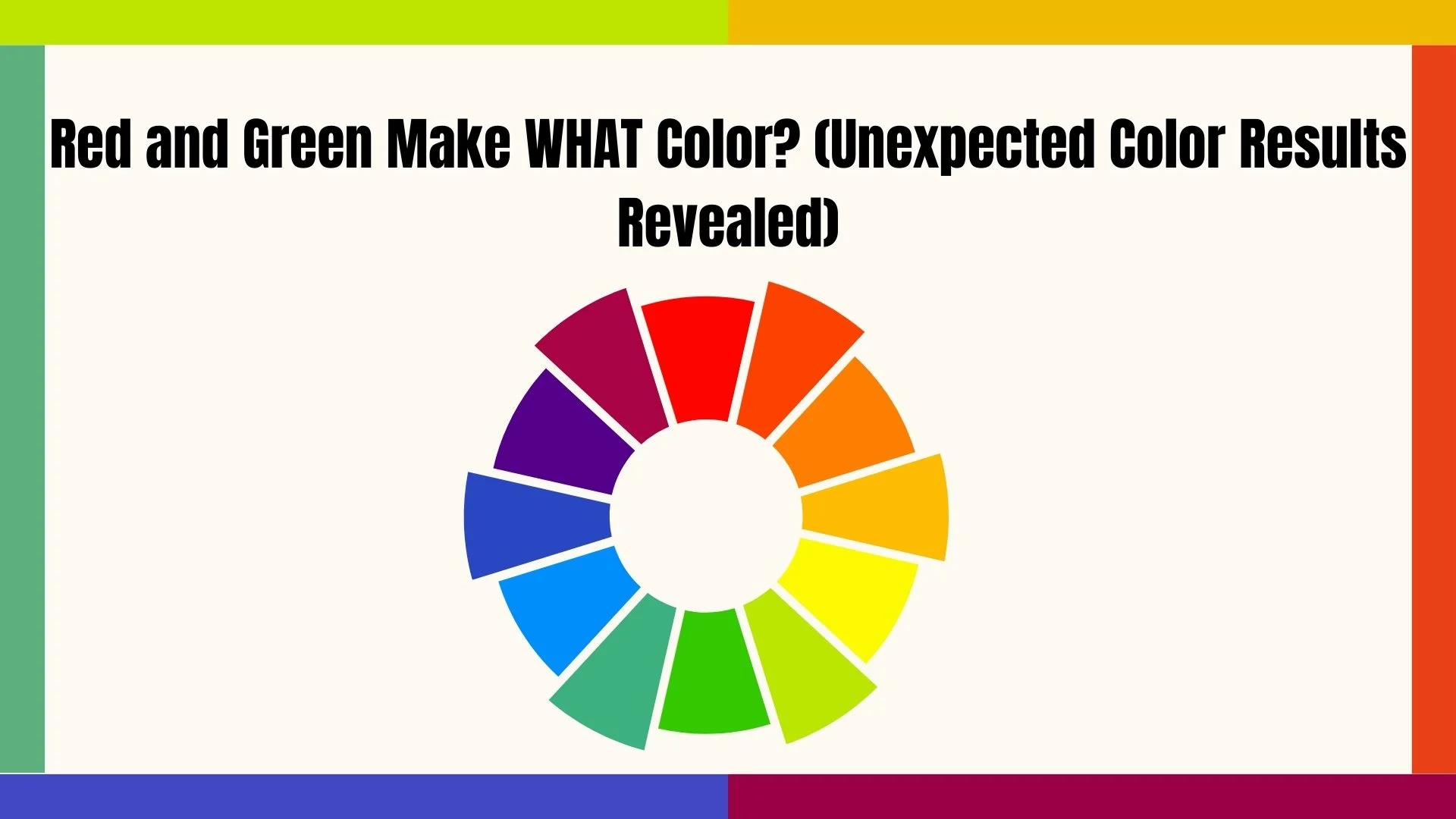
Imagine a circle which is broken as 12 sections. All the sections are different colored placed in a certain order. This composition demonstrates how colors are associated with one another.
The wheel includes:
There are 3 basic colors (red, blue and yellow).
There are 3 secondary colors (green, orange, purple).
6 of the intermediate colors (the tertiary colors)
Why does this matter? Since the color wheel can help you to see which colors are adjacent to one another (analogous colors) and which colors are directly opposite one another (opposite colors).
What Are Complementary Colors?
Complementary colors are pairs that sit directly across from each other on the color wheel. They’re like rivals. They’re opposites. They create maximum visual contrast when placed side by side.
The three main complementary color pairs are:
- Red and green
- Blue and orange
- Yellow and purple
When you make these pairs go together they pop. They vibrate. They demand attention. That is why red and green are great as Christmas colors and festive colors- they make very vivid contrast of colors.
However, the twist is that when you blend the colors complementary to each other, that is, do not give them a side by side positioning, you get something entirely different.
They do not add intensity, they work against one another. They neutralize. They are muted and earthly colors.
So What Color Does Red and Green Make When Mixed?
The Surprising Answer: Brown
Red + green = brown.
Not a bright, exciting color. Not a festive color combo. Just warm, earthy shade brown.
This has become the idyllic otherworldly color product that comes as a a startling surprise to just about everyone. You are combining color wheel rivals and you get one grounded and neutral instead of something bold and new.
The thing, however, is that Brown does not receive enough credit here. It’s incredibly versatile. Deep chocolate brown is indulgent and opulent. Light caramel brown is relaxing and homely. Mahogany brown is classy and beautiful.
Brown is found everywhere in the world, trees, soil, rocks, wood. It is a daring neutral and it will go with just about any color harmony or palette.
Why Do Red and Green Make Brown?
Opposite colors were mixed on the color wheel; however, they do not complement each other; they neutralize each other. They neutralize their intensity of color. Imagine it is as though hot water and cold water are mixed. You don’t get hotter or colder. You get lukewarm.
Green light wavelengths are absorbed by red. Red light wavelengths are absorbed by green. You are blending colors in your paint which absorb a good part of the color spectrum. What’s left? Earthly colors and brown color.
It is as though it is pushing Santa and the Grinch to come to a compromise. On their own, they are audacious and uniquely different. Together? They intersect in each other in a warm, down-to-earth brown.
It is referred to as canceling color intensity. The blending of complementary colours forms dull colours or neutral colours rather than bright colours.
Red and Green in Paint vs. Red and Green in Light
Mixing red and green paint = Brown
Mixing red and green light = Yellow
This is reduced to two alternative systems: subtractive color mixing (paint), and additive color mixing (light).
Paint mixing is subtractive. Every colour pigment absorbs particular colours of light. The combination of paints adds more absorption. Darker and more neutral colors such as brown, are more absorbed.
Light mixing is additive. The combination of red and green lights is a wavelength addition. Green light + red light produces yellow light on screens and displays.
This paper is about paint mixing – the one you mix with real paints, pigments, dyes, and physical colors. There brown is made of red and green.
What Shade of Brown Do Red and Green Make?
It Depends on Your Red and Green
This is the fact: Reds are not all the same. Not all greens are the same.
There is a difference between a light scarlet red and a dark crimson red. A lime green is miles apart to a forest green.
It is the undertones that make it different.
Others are more orange (they are yellow undertones). Other reds are more purple (they are blue undertones).
Same with greens. Some greens are yellow-green. Others are blue-green.
These minor variations produce brown mixtures with dramatic variations.
How Green Affects the Brown
There is more blue and is greener = it is colder.
When your green is more blue (forest green or hunter green), you will have the qualities of cool colors in your brown. It can either appear grayish or slightly purple in color. These colors are cool brown, such as mocha brown and beaver brown.
Warmer, lighter brown is green with a higher percentage of yellow.
When your green has more yellow in it (lime green or chartreuse), then your brown will be a lighter and warmer brown. It even shifts to slightly orange. Imagine, hazelnut brown, tawny brown or ochre brown.
Examples:
- Forest green + red = deeper, cooler brown with gray undertones
- Lime green + red = lighter, warmer brown that might look almost tan
- Kelly green + red = medium brown shades with balanced warm and cool qualities
How Red Affects the Brown
It is no less important than your green choice, your red choice.
The theme of red mixed with blue = a cooler brown, leaning towards purple.
Bureaucratic colors such as crimson, burgundy, or magenta contain blue undertones. These applied with green make cool brown color with a lean towards purple. Imagine mahogany brown, walnut brown or burnt umber.
Red with yellow undertones=toaster, warmer brown.
Oranges such as scarlet and vermillion, or orange-red are colored yellow. Combine these with green color and the end result is a warm brown color that is pleasant and welcoming.
Examples:
- Crimson red + green = rich mahogany brown with depth
- Scarlet red + green = warm burnt sienna vibe
- Burgundy + green = deep chocolate brown or espresso brown
The Ratio Matters Too
Red or more red or green or more green? That alters your brown complexion as well.
More red than green Reddish-brown, as of terracotta or rust.
More green than red = Olive-brown or khaki, to which there are undertones of green.
Added proportions = Classic medium brown, neutral and neutral.
Have it your way with the brown colors? Freak with the color balance. It is done by starting off with an equal amount, and adding small portions of one color until you achieve a desired color.
Every Type of Brown Red and Green Can Make
You are ready to have a look at the number of brown shades you can make using red and green?
There are dozens. Everyone has got a vibe, its own temperature, its own character.
We shall go round them the lightest to the darkest.
Light Browns (Warm Tones)
Light brown colors are warm colors that are energetic and bright.
The color of ochre brown is light and yellowish brown. It looks almost golden. Very earthy shade.
Tawny Brown is a light to medium brown shade with orange-red shades in it. Think of a deer’s coat.
Hazelnut Brown is a literal name as it is light, warm and nutty. Very versatile.
Caramel Brown is pleasant, creamy and cozy. Like melted sugar. Very cozy.
What is your secret of these light brown tones? Wear reds and greens with great yellow under-colour. Perhaps a small portion of white should be added. Reduce the amount of pigment used in order to maintain the mix lighter.
Warm and Cool (Mix)
influenced by the warmer weather- medium brown.
Medium brown colors are just at the center. Some lean warm. Some lean cool.
Cinnamon Brown is spicy, warm and a medium brown. It is reddish-colored and is comfortable.
Sienna brown (or raw sienna) is a traditional down-to-earth color. Warm but not too bright.
Saddle Brown reminds me of some aging leather. Warm and rustic. Very natural tones.
Chestnut Brown is a warm,in depth, medium brown but reddish in nature.
At Mocha Brown, things are cooler. It is medium dark brown with grayish shades.
Such hues are a result of equal ratio red and green. Temperature Move the undertones towards warmer (more yellow) or cooler (more blue).
Dark Browns (Mostly Cool Tones)
Deep, sophisticated colors are dark brown in color and tend to lean towards cool colors.
It is a very deep, reddish-brown, Mahogany Brown. Looks expensive and elegant.
Walnut Brown is a darker and cooler brown having gray undertones. Very sophisticated.
The Umber Brown (or raw umber) is a dark, cool brown that is greenish gray in color.
The color of Burnt Sienna is darker and warmer orange-brown. Think of terracotta pottery.
Burnt Umber is extremely gloomy and chilly. Almost black in some lights.
Chocolate Brown is warm and deep, and rich. Like dark cocoa.
Espresso brown is very dark and cold. Almost black coffee.
Beaver Brown is brown, dark and grayish. Very cool brown.
Bistre Brown is a black-brown, all but, greenish.
Sepia Brown is a dark and warm brown that has reddish shades. Think old photographs.
Quick Reference Table
Here’s a handy chart showing different brown shades, their temperature, and how to create them:
| Brown Shade | Lightness | Temperature | Best Red | Best Green |
|---|---|---|---|---|
| Ochre Brown | Light | Warm | Orange-red | Yellow-green |
| Hazelnut Brown | Light-Medium | Warm | Scarlet | Lime green |
| Caramel Brown | Medium | Warm | Vermillion | Kelly green |
| Cinnamon Brown | Medium | Warm | Scarlet | Medium green |
| Saddle Brown | Medium-Dark | Warm | Red-orange | Forest green |
| Mocha Brown | Medium-Dark | Cool | Crimson | Blue-green |
| Chestnut Brown | Medium-Dark | Warm | Burgundy | Hunter green |
| Mahogany Brown | Deep | Warm | Dark red | Deep green |
| Walnut Brown | Dark | Cool | Burgundy | Blue-green |
| Espresso Brown | Very Dark | Cool | Maroon | Dark forest green |
| Chocolate Brown | Very Dark | Warm | Deep red | Dark green |
How to Mix Red and Green to Make the Perfect Brown
What You’ll Need
Gather these supplies before you start:
- Red paint (acrylic, oil, or watercolor—your choice)
- Green paint (same type as your red)
- Mixing palette or surface (paper plate works fine)
- Palette knife or brush for mixing
- White paper to test your brown shades
- Small containers if you want to save your custom browns
- Paper towel for cleanup
Step-by-Step Mixing Guide
Follow this process for the best color mixing result:
Step 1: Start with equal parts
Put equal amounts of red and green on your palette. About a quarter-size dollop of each is good for testing.
Step 2: Mix thoroughly
Use your palette knife or brush to blend them completely. No streaks. No patches of pure red or green. Mix until the color is uniform.
Step 3: Assess the brown
Look at what you created. Is it too red? Too green? Too light? Too dark? This is your baseline brown color.
Step 4: Adjust as needed
Here’s how to tweak your brown shades:
- Too green? Add more red in tiny amounts
- Too red? Add more green in tiny amounts
- Too dark? Add a tiny bit of white or yellow
- Too light? Add more of both original colors
- Want warmer brown? Add a touch of yellow
- Want cooler brown? Add a tiny bit of blue
Step 5: Test on paper
Before using your brown on your actual project, test it on white paper. Colors look different on a palette than they do on your final surface.
Pro Tips for Better Brown
It is always best to mix more than you imagine you need. This is because the brown color is almost impossible to replicate in the future. Mix in batches.
Write down your ratios. In case you love a certain shade, make a note of the amount of every color you applied. Makes it reproducible.
Add the white or black in little amounts. A little goes a long way. The intensity of color in these changes dramatically.
To warmer brown, a bit of yellow is added. Here drives your brown in the direction of warm colors and earth-colours.
To make it more like cooler brown, a little blue is added. This turns your brown into grey-colored cool colors.
Wipe yourself off in between change of tools. Your brown colors get contaminated by other colors in ways that you least expect.
Experiments should be tracked with the help of a color chart. Sample on paper with notes that have been painted on. Reading your own reference guide.
Why Does Brown from Red and Green Look Different Than Store-Bought Brown?
The Undertones Tell the Story
Mixed browns have more depth. They have remnants of their parent colors red and green making them complex and giving them character.
Browns that are picked up at stores are usually more neutral. They are designed to be generic, sold as middle-of-the-road, in other words, everything. They do not share the personality or undertones as your traditional combination.
There is a history behind your brown that you got by mixing up red and green. It has remnants of its source colors. It could be rather warm or cool, rather reddish or greenish depending on what red and green you mixed.
When to Mix Your Own vs. Buy Brown
Mix your own when:
- You need a specific shade that doesn’t exist in stores
- You want more control over warm colors vs. cool colors
- You’re running out of brown paint and have red and green available
- You want richer, more complex brown shades with depth
- You’re learning about color theory and want hands-on practice
Buy brown when:
- You need large quantities for a big project
- You want consistency across multiple painting sessions
- You need neutral brown fast without experimenting
- You’re working professionally and need standardized colors
Real-World Uses: What Can You Do With Red-Green Brown?
Painting and Art Projects
Realistic painting is impossible without brown.
Landscape picture painting: Trees, earth, rocks, filthy lanes–they all demand different tones of brown. The combination of red and green provides natural colors that will be used in outdoors scenes.
Portrait work: Warm brown or cool brown usually required on the skin tones, hair color and shadows. You have your usual brows in it.
Abstract art: Grounded, relaxing compositions are made by the use of earthly colors and earth tones. Blend your brown color to the very image you have in mind.
Painting depth and dimension: The shadows and definition of forms and three-dimensional qualities that are added to flat paintings by browsns.
Interior Design
Brown is very effective in residential settings.
Accent walls: Rich chocolate brown or warm chestnut brown should be used to provide a warm centre of attention.
Furniture painting: Refinish old furniture in personal custom shades of brown that best suit you.
Rustic elements: Saddle brown, walnut brown and burnt sienna are ideal in the themes of farm house or rustic.
Boho and naturalistic: The natural shade browns go well with plants, natural fabrics and organic materials.
Crafts and DIY
Brown is very practical when it comes to practical projects.
Leather dyeing: Have your own leather colors in bags, belts and accessories.
Effects of wood staining: Combine the browns which resemble natural wood color to use on furniture.
Autumn decorations: Fall decorations require to be brown. Make it yourself to make it unique on a seasonal basis.
Designs of natural products: Natural products including soaps, candles, natural products tend to be earthly in appearance by use of earth tones and colors.
The options are limitless as soon as you know what color red and green make and the possibilities of controlling the outcome.
Common Questions About Mixing Red and Green
Does Red and Green Always Make Brown?
In paint and pigment: Yes. When you physically combine red and green colors, dyes, or pigments, then you will get brown color. This is the color mixing that is subtractive.
In light: No. When you combine the red light and the green light (as in a screen or at colored bulbs) you have the yellow. It is the additive color mixing.
Context matters. This paper is concerned with the physical mixing of paint, in which case red and green mix up to form brown.
Can You Make Green from Red and Brown?
No. There is already red and green mixed in Brown. You can not undo them up to pure green.
To create green, you have to mix the primary colors, blue and yellow equal to green.
When the colors are combined to form brown hues then they can not be cast back to their original color.
What If My Brown Looks Muddy?
Muddy brown color normally implies that you have combined so many colors.
The issue: When several colors are combined, one obtains dull colors that are not clear and vivid.
The resolution: The beginning of a new era with red and green alone. Unless necessary, then do not add black or white or any other color. Malcolm, do not complicate your paint.
Do not contaminate your red and green palette by other colors.
Can I Make Black from Red and Green?
Sort of. You are even able to create a very dark brown color which is nearly close to black.
Red + green creates brown. Add darker colors of both of them. A slight tint of blue is added to make it even darker. Then you will finally have a very dark burnt umber or espresso brown which resembles almost black.
However, pure and true black is difficult to blend using colors. Majority of the artists simply purchase black paint.
Having said that, a lot of artists add very dark brown colors rather than straight black color. They are natural and less cruel.
What’s the Difference Between Red + Green Brown and Other Browns?
There are several ways of making brown shades:
Red + green = Brown that has the traits and undertones of both parent colors. Has more personality.
Red + blue + yellow (combination of three primary colors) = More neutral brown color. Very balanced.
Orange + blue = Brown that is more gray. Cooler brown usually.
Yellow + purple = Brown that is less vivid. Sometimes looks olive.
The two methods produce a little variation in the brown coloring. Red color combined with green produces the most varied and deepest brown as the undertones can be controlled with the highest accuracy.
Other Surprising Color Combinations You Should Know
What Color Do Other Complementary Colors Make?
complementary color mixes always neutralize. Here’s what you get:
blue + orange = brown (with more gray of rust in it)
When these opposing colors are combined, you get the earthly shade browns that are cooler. In fact, sometimes they appear nearly grayish. The mixing effect of the colors is cool brown such as mocha brown or umber brown.
The brown (muted and olive) is the result of yellow and purple.
Such a mix makes the brown tones more somber and dull. Often looks olive or khaki. The greenish undertones of the brown color can be noticed.
The trend is obvious: Complementary Colors cancelize one another. Complementary colors nullify color intensity and give earthly colors and neutral tones.
Colors That Make Unexpected Results
The following are other unexpected combinations of color mixing results:
Blue + orange Rust brown or burnt orange-brown (depending on your proportion).
Purple + yellow-Olive brown or khaki greenish.
Pink and green make Grayish beige or taupe, very dull brown colors.
Red + yellow = Orange (a blend of the three primary colors will make the brownest brown)
|human|>Red + yellow = Orange (a mixture of the three primary colors will make the most balanced brown)
Knowing these mixes provides you with the total control of the color theory and paint mixing.
The Science Behind Why Red and Green Make Brown
Want to understand the actual science of why mixing red and green creates brown color?
Subtractive Color Mixing Explained
Paint employs the use of subtractive color. Here’s how it works
Paint doesn’t create light. It takes up (removes) some color waves of light and reflects other ones.
Green and blue are absorbed by red color. It has red colors that are reflected to your eyes. That’s why you see red.
The red and blue color are absorbed by green paint. It bounces the green colors back to your eyes. That’s why you see green.
The green light is absorbed by the red pigment.
The red color is absorbed by the green pigment.
The combination of these absorbs the greater part of the visible range.
What’s left to reflect back? The middle range of wavelengths is a narrow range. To our eyes that looks like brown color.
The darker and more neutral the brown shades are the higher the number of wavelengths which are absorbed. That is why the combination of rivals makes the tones and colors quite muted and not very bright.
RGB vs. RYB Color Models
RYB (Red, Yellow, Blue) is the traditional art and paint mixing model. This is what you use with physical paints, pigments, and dyes. In this system:
- Primary colors are red, yellow, blue
- Secondary colors are green, orange, purple
- Red + green = brown
RGB (Red, Green, Blue) is the light and screen model. This is what computers, TVs, and phone screens use. In this system:
- Primary colors are red, green, blue (for light)
- Red light + green light = yellow light
- Colors are additive (adding wavelengths, not subtracting them)
This is why the same color combination (red and green) produces different results depending on whether you’re working with paint or light.
Final Thoughts: Red and Green Make What Color?
Brown.
When mixed with red and green, the resulting color is brown. They are complementary colors which cancel the intensity of color of each other.
Specifically brown colors are determined by the red and green that you have. Undertones matter. Cooler brown is made by blue undertones. Warmth Brown colors are produced through yellow undertones.
There are dozens of variations of brown color: light brown with such undertone as ochre and hazelnut, medium brown tones such as cinnamon and saddle brown, or the dark brown shades: mahogany, chocolate, and espresso.
Paint mixing is subtractive. Light mixing is additive. which is the reason why red and green make brown in paint and yellow in light.
Browns are the colors of the earth, which are ideal to paint, design, crafts, and multitude of creative projects. They are natural colors that are compatible with nearly any color scheme. If you need more interested info like that visit quick guider.
It is more in control of your art, design, and creative work when you know what happens when you mix red and green.