
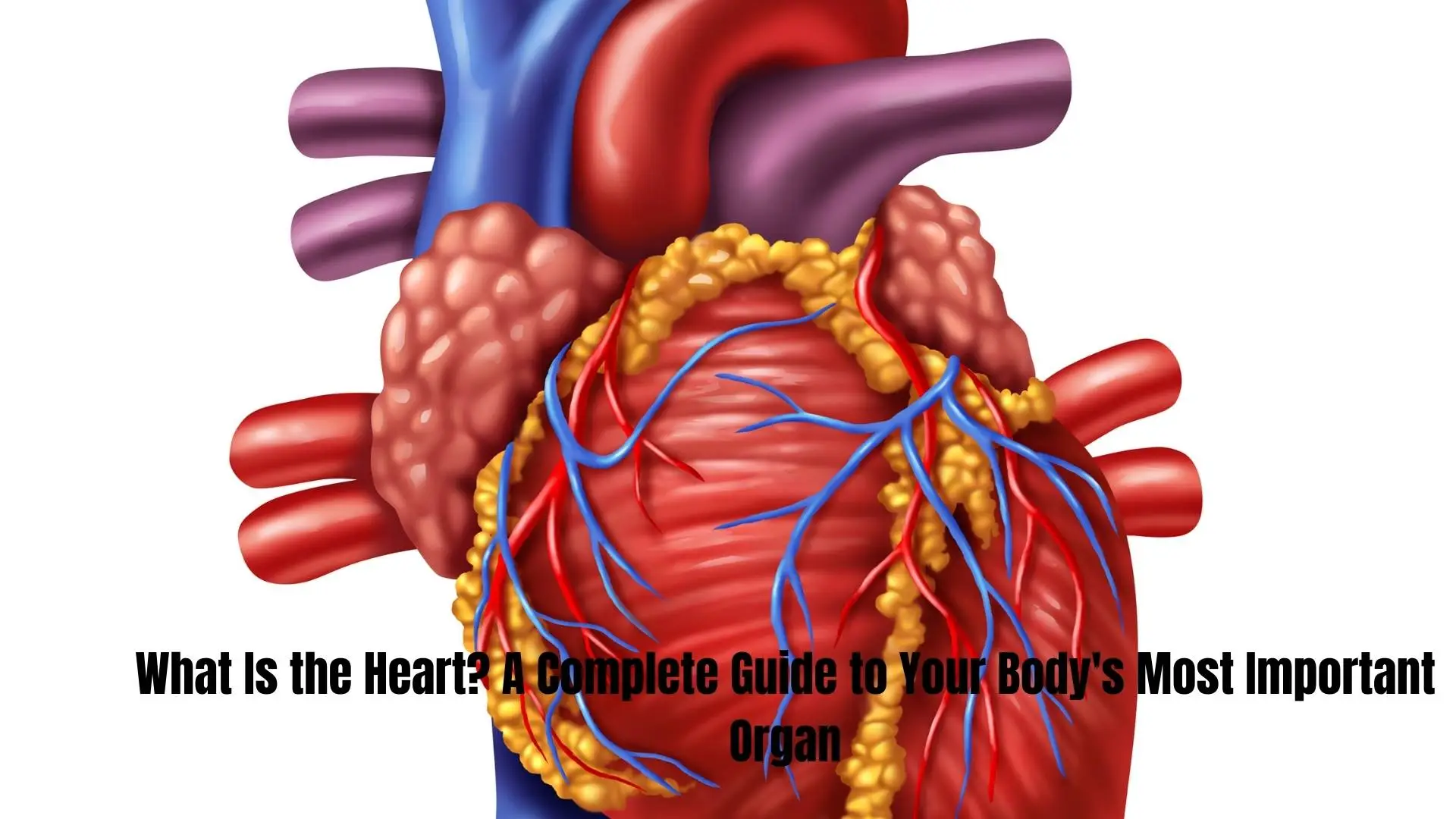
What Is the Heart? A Complete Guide to Your Body’s Most Important Organ. Your heart is working right now. It has been working since the day you were born. It never takes break. It never stops. It is the most important muscular organ in your entire body. But how much do you really know about it? This guide will teach you everything — what the heart is, how it works, what it looks like, and why taking care of it matters so much.
What Is the Heart?
The heart is a fist-sized organ that pumps blood through your body. It is the main organ of your cardiovascular system and your circulatory system. Without it, nothing else in your body can work.
Your heart is made of strong muscle and tissue. It is not like any other muscle in your body. It never gets tired. It beats every single second of every single day — for your entire life.
So what does the heart actually do? In simple terms, it acts as a blood pump. It moves blood to every part of your body. That blood carries oxygen and nutrients to your cells. At the same time, it takes away carbon dioxide and other waste so your body can get rid of them. If you need info related Current Local Time in Boston, Massachusetts visit this page.
Your heart is also in charge of two other important jobs. It keeps your heart rate steady. And it helps maintain your blood pressure at healthy levels.
What Does the Heart Do? (Function of the Heart)
The main job of your heart is simple — it pumps blood. But it does a lot more than that.
How does the heart move blood? Your heart squeezes and relaxes over and over again. Each time it squeezes, it pushes blood out to your body. Each time it relaxes, it pulls blood back in. This happens thousands of times every single day.
When blood moves through your body, it does two big things at the same time. First, it brings oxygen and nutrients to your cells. Your cells need these things to stay alive and work properly. Second, it picks up carbon dioxide and other waste removal products from your cells. These things need to leave your body, and your blood carries them away.
What else does the heart control? Besides pumping blood, your heart also plays a big role in keeping your heart rate and blood pressure in a healthy range.
Your heart does not work alone, though. It works together with other systems in your body to keep everything running smoothly.
Your nervous system helps control your heart rate. It sends signals to tell your heart to beat slower when you are resting. It tells your heart to beat faster when you are stressed or exercising. This is called the stress response.
Your endocrine system also plays an important role. It releases hormones into your body. These hormones tell your blood vessels to tighten or relax. This directly affects your blood pressure. Hormones from your thyroid gland can also speed up or slow down your heartbeat rhythm.
Where Is the Heart Located?
Many people think the heart is on the left side of the body. But it is actually more toward the center of your chest.
Your heart sits in the front of your chest. It is located slightly behind and to the left of your sternum (breastbone). The sternum is the bone that runs down the middle of your chest.
Is the heart protected? Yes. Your rib cage surrounds and protects your heart from the outside. This keeps it safe from injury.
Your heart also sits between your right and left lungs. To make room for the heart, your left lung is actually a little bit smaller than your right lung. This is completely normal and healthy.
What Does the Heart Look Like?
If you have ever seen a picture of the heart, you might picture the classic heart shape. But a real heart does not look like that at all.
A real heart looks a little bit like an upside-down pyramid with rounded edges. It is not perfectly shaped or symmetrical. It is a strong, thick muscle with a very specific look.
Large blood vessels go into and out of your heart. These vessels carry blood to and from the rest of your body. They connect your heart to every part of you.
How Big Is the Heart?
Everyone’s heart is a slightly different size. But most adults have a heart that is about the same size as their own fist.
On average, an adult heart weighs about 10 ounces. That is roughly the weight of a small apple. Your heart size may be a little bigger or a little smaller depending on your overall body size and sex.
Does heart size matter? A slightly bigger or smaller heart is normal. But in some cases, an unusually large or small heart can be a sign of a health problem. A doctor can check your heart size with simple tests.
What Are the Parts of the Heart? (Heart Anatomy)
Your heart anatomy is made up of many different parts. Each part has its own special job. Together, they work like the parts of a building.
Think of it this way. A building has walls, rooms, doors, plumbing pipes, and electrical wiring. Your heart has all of these things too — just in a different way.
Heart Walls
Your heart walls are the muscles that do the squeezing and relaxing. They push blood out and pull it back in. This is how blood moves through your body.
A thick layer of muscle called the septum runs down the middle of your heart. It divides your heart into two sides — a left side and a right side. These two sides do different jobs, which we will talk about later.
What are the layers of the heart wall? Your heart walls are made up of three layers. Each layer has its own purpose. If you want to read about Current Local Time in New Jersey then visit this page.
The endocardium is the inner layer. It is a smooth, thin lining on the inside of your heart. It helps blood flow smoothly through your heart chambers.
The myocardium is the middle layer. This is the thick, muscular layer of your heart. It is the part that actually squeezes and pumps blood. It is the strongest layer of your heart wall.
The epicardium is the outer layer. It acts as a protective covering on the outside of your heart. It is actually one layer of a larger protective sac called the pericardium.
What is the pericardium? The pericardium is a sac-like covering that wraps around your entire heart. It produces a small amount of fluid. This fluid keeps your heart from rubbing against other organs inside your chest. Think of it like a slippery sleeve that lets your heart move smoothly.
Heart Chambers
Your heart has four separate heart chambers. Two are on the top and two are on the bottom.
The top two chambers are called atria (one atrium, two atria). The bottom two chambers are called ventricles. Each side of your heart has one atrium on top and one ventricle on the bottom.
What does each chamber do?
The right atrium is the first stop for blood coming back to your heart. Two large veins bring oxygen-poor blood into the right atrium. The superior vena cava carries blood from the upper part of your body. The inferior vena cava brings blood from the lower part of your body. Once the blood arrives, the right atrium pushes it down into the next chamber.
The right ventricle receives blood from the right atrium. It then pumps that oxygen-poor blood to your lungs through the pulmonary arteries. Your lungs are where the blood gets filled back up with fresh oxygen.
The left atrium receives oxygen-rich blood that just came back from your lungs. The pulmonary veins carry this fresh blood from the lungs into the left atrium. Then the left atrium pushes the blood down into the left ventricle.
The left ventricle is the strongest chamber in your heart. It is also slightly larger than the right ventricle. Its job is to pump oxygen-rich blood out to the rest of your body. It has to push very hard because it needs to send blood all the way through your entire body.
Heart Valves
Your heart valves act like doors between your heart chambers. They open and close with every heartbeat. Their main job is to make sure blood flows in only one direction. They stop blood from going the wrong way.
What are the two types of heart valves?
The first type is called atrioventricular (AV) valves. These valves sit between the top and bottom chambers of your heart. There are two of them.
The tricuspid valve is the door between your right atrium and your right ventricle. It opens to let blood flow down and closes to stop it from going back up.
The mitral valve is the door between your left atrium and your left ventricle. It works the same way — open to let blood through, closed to keep it moving in the right direction.
The second type is called semilunar (SL) valves. These valves open when blood is leaving your ventricles. There are two of them as well.
The aortic valve opens when blood flows out of your left ventricle and into your aorta. The aorta is the biggest artery in your body. It carries oxygen-rich blood to the rest of your body.
The pulmonary valve opens when blood flows from your right ventricle into your pulmonary arteries. The pulmonary arteries are special. They are the only arteries in your body that carry oxygen-poor blood. They take that blood to your lungs to get more oxygen.
Blood Vessels
Your heart pumps blood through a network of blood vessels. These vessels are like pipes that carry blood all over your body. There are three main types.
Arteries carry oxygen-rich blood away from your heart and out to your body’s tissues. The one big exception is your pulmonary arteries. They carry oxygen-poor blood to your lungs.
Veins do the opposite job. They carry oxygen-poor blood back to your heart from the rest of your body.
Capillaries are tiny blood vessels. They are so small you cannot see them with your eyes. They are where the exchange happens — where your body swaps oxygen-rich blood for oxygen-poor blood and picks up nutrients while dropping off waste.
What are coronary arteries? Your heart needs its own blood supply to stay healthy. That is what coronary arteries are for. They run along the surface of your heart and supply it with the oxygen and nutrients it needs.
There are two main coronary arteries with important branches.
The left coronary artery splits into two branches. The circumflex artery supplies blood to the left atrium and the side and back of the left ventricle. The left anterior descending artery (LAD) supplies blood to the front and bottom of the left ventricle and the front of the septum.
The right coronary artery (RCA) supplies blood to the right atrium, the right ventricle, the bottom part of the left ventricle, and the back of the septum.
Electrical Conduction System
Your heart does not beat on its own by accident. It beats because of an electrical conduction system. This system is like the electrical wiring inside a building. It controls the rhythm and pace of every single heartbeat.
How does the electrical system work? The signals always start at the top of your heart and travel down to the bottom. This makes sure your heart chambers squeeze in the right order.
The sinoatrial (SA) node is where it all begins. It is like the master switch of your heart. It sends out electrical impulses that tell your heart to beat. This is why it is often called the heart’s natural pacemaker.
The atrioventricular (AV) node receives the signal from the SA node. It passes the electrical impulses from your upper chambers down to your lower chambers. It also adds a tiny pause so the atria can finish pushing blood before the ventricles squeeze.
The Bundle of His carries the signal from the AV node down to the next step. It passes the impulses to two branches.
The left bundle branch sends electrical impulses to your left ventricle. The right bundle branch sends impulses to your right ventricle.
Finally, the Purkinje fibers receive the signal and make your ventricles contract. This is when your heart squeezes and pumps blood out to your body or to your lungs.
How Does the Heart Work? (How Blood Flows Through the Heart)
Now that you know all the parts, let us put it all together. Here is how blood circulation works step by step.
Blood first enters your heart through the right atrium. It comes in through two big veins — the superior vena cava from the top of your body and the inferior vena cava from the bottom. This blood is oxygen-poor. It has already dropped off its oxygen and picked up carbon dioxide from your body.
The right atrium then pushes the blood through the tricuspid valve and into the right ventricle.
The right ventricle squeezes and pumps that oxygen-poor blood through the pulmonary valve and into the pulmonary arteries. The pulmonary arteries carry the blood to your lungs.
Inside your lungs, something very important happens. The blood drops off its carbon dioxide and picks up fresh oxygen. Now it is oxygen-rich blood.
The oxygen-rich blood then travels back to your heart through the pulmonary veins. It enters the left atrium.
The left atrium pushes the blood through the mitral valve and into the left ventricle.
The left ventricle is the strongest pump. It squeezes hard and sends the oxygen-rich blood through the aortic valve and into the aorta. The aorta then sends the blood out to the rest of your body.
And then the whole cycle starts again. This entire process — one complete loop — happens in less than a minute. Your heart does this thousands of times every single day without you even thinking about it. That is cardiac output — the amount of blood your heart pumps in a set amount of time.
What Are Common Heart Conditions?
Heart disease is one of the most common health problems in the United States. In fact, it is the leading cause of death in the country. Many different conditions can affect your heart and stop it from working the way it should.
Arrhythmia is when your heartbeat rhythm is not normal. Your heart may beat too fast, too slow, or in an uneven pattern.
Cardiomyopathy is a condition where your heart muscle becomes thicker, larger, or stiffer than it should be. This makes it harder for your heart to pump blood properly.
Congestive heart failure happens when your heart becomes too weak or too stiff to pump blood the way it needs to. Blood can back up, and fluid can build up in parts of your body.
Coronary artery disease is one of the most common and dangerous heart conditions. It happens when plaque — a sticky buildup of fats and other things — clogs your coronary arteries. This makes the arteries narrow and restricts blood flow to your heart.
Heart attack, also called myocardial infarction, happens when a coronary artery becomes completely blocked. When this happens, blood cannot reach part of your heart muscle. That part of the muscle begins to die without oxygen.
Heart valve disease occurs when one or more of your heart valves is not working correctly. A valve may not open or close all the way. This can disrupt normal blood flow through your heart.
High blood pressure, also known as hypertension, means your blood is pushing too hard against the walls of your arteries. Over time, this extra pressure can damage your heart and blood vessels.
High cholesterol means there are too many fats in your blood. Too much cholesterol can lead to plaque buildup in your arteries, which increases your risk of heart disease and heart attack.
Diabetes is a condition where your blood sugar stays higher than it should be. High blood sugar over time can damage your blood vessels and increase your risk of heart problems.
Pericarditis is inflammation of the pericardium — the protective sac around your heart. It can cause chest pain and discomfort.
What Are the Signs and Symptoms of Heart Problems?
Many heart conditions share similar signs and symptoms. It is important to know what to watch for.
Chest pain is one of the most common and serious warning signs. It can feel like pressure, tightness, or squeezing in the chest. If you experience sudden chest pain, get medical help right away.
Heart palpitations are when you can suddenly feel your heartbeat. It may feel like your heart is beating too fast, skipping beats, or fluttering. This can be scary but is not always dangerous.
Shortness of breath can happen even when you are not being active. It may mean your heart is not pumping blood efficiently enough to meet your body’s needs.
Dizziness can occur when your heart is not sending enough blood to your brain. This can make you feel lightheaded or unsteady.
Fatigue — feeling very tired all the time — can be a sign that your heart is working harder than it should. Your body may not be getting enough oxygen-rich blood.
Swelling (edema) in your legs, ankles, or feet can be a sign of congestive heart failure. When your heart cannot pump properly, fluid can build up in the lower parts of your body.
Important: If you notice any of these symptoms, especially sudden chest pain or extreme shortness of breath, contact a healthcare provider or call emergency services right away.
How Is Heart Health Tested?
Doctors use many different tests to check how well your heart is working. These tests are safe, quick, and give doctors a lot of useful information.
Blood pressure measurement is one of the simplest tests. It checks how hard your blood is pushing against your artery walls. High blood pressure can be a warning sign of heart problems.
An electrocardiogram (EKG) measures the electrical impulses in your heart. It can show doctors your heartbeat rhythm and help them spot problems like arrhythmia or signs of a heart attack.
An echocardiogram uses sound waves to create a picture of your heart. Doctors can see how your heart is shaped, how big it is, and how well it is pumping blood.
A chest X-ray gives doctors a picture of your heart and lungs. It can show if your heart is enlarged or if there are other problems in the chest.
Blood tests can check for things like cholesterol levels, blood sugar, and other markers that tell doctors about your heart health.
Cardiac catheterization is a more detailed test. A thin tube is placed into a blood vessel and guided to your heart. It helps doctors see the inside of your heart and your coronary arteries up close.
A CT scan uses X-rays to create detailed cross-section images of your heart and blood vessels. It can show plaque buildup in your coronary arteries.
A Heart MRI (magnetic resonance imaging) gives doctors a very clear picture of your heart muscle and blood vessels. It can show damage or disease that other tests might miss.
A stress test checks how your heart works during physical activity. Doctors watch your heart rate, blood pressure, and EKG while you exercise. It helps them see if your heart has trouble when it is working harder than normal.
How Can You Keep Your Heart Healthy?
The good news is that you have a lot of power to keep your heart healthy. Small changes in your daily life can make a big difference over time.
Maintain a healthy weight. Carrying extra weight puts more stress on your heart. Achieving and keeping a weight management goal that is healthy for your body can lower your risk of heart disease.
Eat a heart-healthy diet. A heart-healthy diet includes plenty of fruits, vegetables, and whole grains. These foods are full of vitamins and fiber. They help keep your blood vessels healthy and your cholesterol levels in a good range. Try to limit foods that are high in unhealthy fats, sugar, and processed ingredients.
Limit your sodium intake. Too much sodium can raise your blood pressure. Try to use less salt when cooking and choose foods that are lower in sodium.
Stay physically active. Regular exercise and physical activity are some of the best things you can do for your heart. Aim for at least 150 minutes of moderate activity each week. Walking, swimming, and cycling are all great options.
Manage your stress. Too much stress over time can hurt your heart. Find healthy ways to deal with stress. Meditation and journaling are two simple tools that many people find helpful. Stress management is just as important as diet and exercise when it comes to heart health.
Quit smoking and avoid tobacco. Smoking cessation is one of the most important steps you can take for your heart. Tobacco use damages your blood vessels and increases your risk of heart attack and heart disease. If you smoke, talk to a healthcare provider about ways to quit. Also try to avoid secondhand smoke whenever possible.
Drink alcohol in moderation. Too much alcohol can raise your blood pressure and put extra strain on your heart. If you drink, keep it to a small amount.
Follow your doctor’s advice. If you already have a heart condition, it is very important to follow your healthcare provider’s treatment plan. Take your heart medications or blood pressure medication at the right times and in the right amounts. Do not skip doses.
Conclusion
Your heart is the most important organ in your body. It pumps blood nonstop — every second, every minute, every day — for your entire life. It delivers oxygen and nutrients to every cell and takes away waste so you can stay healthy and alive. If you need more interested info like that visit quick guider.
Understanding how your heart works is the first step to taking better care of it. Now that you know what it is, what it does, and how it is built, you have the knowledge to make smarter choices for your heart health.
Heart disease is very common. But it is also very preventable in many cases. By eating well, staying active, managing stress, and avoiding smoking, you can give your heart the best possible chance to stay strong and healthy for years to come.
If you have any concerns about your heart, do not wait. Talk to your healthcare provider. They can help you understand your risk and put together a plan that works for you. Your heart keeps you alive — take care of it.